Rotary Kiln Manufacturer & Exporter Worldwide
Shalimar Engineering is a trusted rotary kiln manufacturer and exporter with 20+ years of experience in designing and supplying high-performance industrial rotary kilns for cement, mineral processing, chemical, refractory, fertilizer, and waste treatment industries worldwide. Our rotary kilns are engineered for continuous, high-temperature processing operations that demand precise temperature control, consistent material throughput, and long operational life with minimum maintenance downtime.
Every custom rotary kiln we manufacture is designed to match your specific material, required processing temperature, retention time, and production capacity. From small batch type rotary kilns for pilot and small-scale operations to large continuous industrial rotary kilns for cement and mineral processing plants, Shalimar Engineering delivers reliable, energy-efficient thermal processing solutions with complete installation and commissioning support. Our rotary kilns are exported to 30+ countries across Asia, Africa, the Middle East, and Europe trusted by cement manufacturers, mineral processors, and chemical producers worldwide.
Visit our homepage to explore our complete range of calcination and industrial processing equipment.
What is a Rotary Kiln?
A rotary kiln is an inclined, slowly rotating cylindrical thermal processing furnace used to heat solid materials to extremely high temperatures in order to cause a chemical reaction or physical change.
The rotary kiln works by holding the material at a specified rotary kiln temperature for a precise amount of time called the retention time which is determined by the material’s chemical and thermal properties and the required degree of processing.
Industrial rotary kilns are used to carry out a wide range of high-temperature processes including rotary kiln for calcination, sintering, thermal desorption, organic combustion, reduction roasting, and heat setting. Originally developed for the cement industry in the late 19th century, rotary kilns are now found across a wide range of industries due to their flexibility, reliability, and ability to handle diverse feed materials at temperatures ranging from 200°C to 1,500°C.
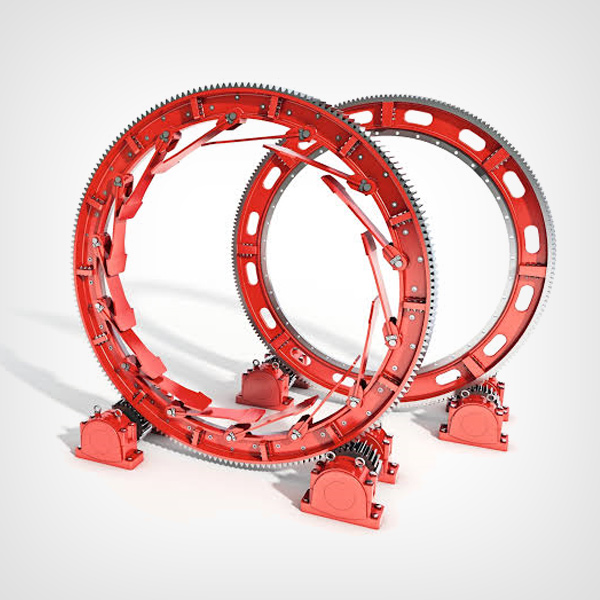
The rotary kiln design consists of a large rotating cylinder (drum) set at a slight incline of 1.5% to 5%, mounted on riding rings and trunnion rollers, and driven by a gear drive or friction drive system. The material is fed at the elevated end and moves through the kiln by a combination of gravity and the rotary motion, exiting at the lower discharge end after completing the required thermal processing at the specified rotary kiln temperature.
Working Principle of a Rotary Kiln
The rotary kiln working principle is based on continuous material movement through a rotating, inclined cylinder combined with controlled high-temperature heat application through either direct or indirect firing:
Step 1 Material Feed :
The feed material is introduced at the elevated feed end of the rotary kiln through a feed chute or screw feeder at a controlled, consistent feed rate. The slight inclination of the kiln shell typically 1.5% to 5% causes the material to move progressively toward the discharge end as the kiln rotates, ensuring a consistent retention time for all material passing through the kiln.
Step 2 Heat Application :
Heat is applied either by direct fired rotary kiln where a burner fires directly into the drum and the material contacts the hot combustion gases or by indirect fired rotary kiln where the kiln shell is heated externally and heat is conducted through the shell wall to the material, maintaining an inert or controlled atmosphere inside the drum. The choice between direct and indirect firing depends on the material’s sensitivity to combustion gases and the required processing atmosphere.
Step 3 Material Processing :
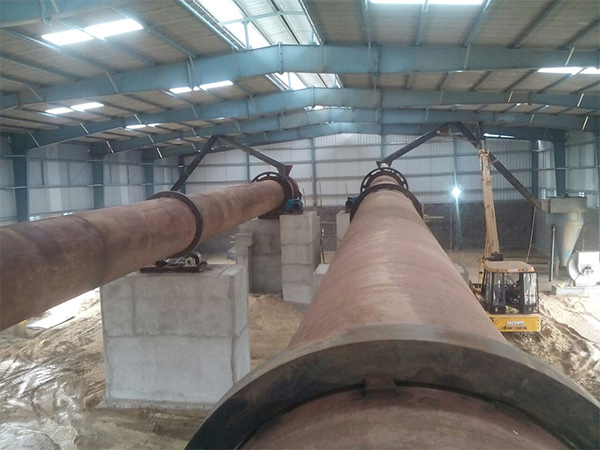
As the material travels through the industrial rotary kiln, it is continuously lifted and tumbled by the rotation of the drum, ensuring uniform heat exposure across all material particles. The rotary kiln temperature inside the drum is precisely controlled through the burner firing rate and air flow to maintain the exact temperature profile required for the specific calcination, sintering, or heat treatment process.
Step 4 Discharge :
The fully processed material exits at the lower discharge end of the kiln into a rotary cooler, water quench, or collection hopper depending on the process requirements and material handling needs for the downstream process.
Types of Rotary Kilns We Manufacture
Direct Fired Rotary Kiln
In a direct fired rotary kiln, the burner fires directly into the rotating drum and the material is processed through direct contact with the hot combustion gases. This type is the most common configuration used for rotary kiln for calcination, sintering, and roasting applications in cement, mineral, and chemical industries where the material is not sensitive to combustion gases.
Indirect Fired Rotary Kiln
In an indirect fired rotary kiln, the drum is heated from the outside by an external heat source and the material is processed in an inert or controlled atmosphere inside the drum. This configuration is ideal for heat treatment of materials that must not contact combustion gases widely used in chemical processing, carbon activation, and pharmaceutical applications where product purity is critical.
Batch Type Rotary Kiln
Our batch type rotary kilns are designed for small-scale, intermittent calcination and heat treatment operations. Material is loaded into the drum, processed for a set time at the required rotary kiln temperature, and discharged before the next batch is loaded. Ideal for R&D, pilot production, and small-scale specialty calcination applications.
Rotary Kiln for Cement Industry
Our rotary kiln for cement industry is specifically engineered for clinker production through the calcination of limestone at temperatures up to 1,450°C. It features high-temperature rotary kiln refractory lining, efficient burner design, and a robust rotary kiln drive system capable of continuous 24/7 operation in demanding cement production environments. Also explore our cement kiln page for more details.
Rotary Kiln for Mineral Processing
Our rotary kiln for mineral processing is designed for high-temperature roasting, reduction, and calcination of minerals including bauxite, iron ore, limestone, dolomite, and refractory materials. See also our bauxite kiln and lime kiln pages for specialized calcination applications.
Key Features of Shalimar Rotary Kilns
- Heavy-Duty Alloy Steel Shell with Quality Refractory Lining Every industrial rotary kiln we manufacture features a heavy-duty alloy steel or carbon steel shell, precision-rolled and welded to exact dimensional tolerances, lined internally with high-quality rotary kiln refractory either refractory bricks or castable refractory selected specifically for the processing temperature and material being handled. The refractory lining protects the steel shell from the extreme processing temperatures and ensures long kiln life with minimal maintenance requirements.
- Precise Temperature Control for Consistent Processing Our rotary kilns are equipped with high-efficiency burner systems and precision temperature control instrumentation that maintains the exact rotary kiln temperature profile required for your specific process. Whether you need a uniform temperature throughout the kiln length or a carefully controlled temperature gradient, our control system delivers precise, repeatable results that ensure consistent product quality in every production run.
- Variable Speed Drive System for Flexible Retention Time Our rotary kilns feature variable speed rotary kiln drive systems that allow the operator to precisely adjust the rotational speed of the kiln drum and therefore the material retention time without stopping the kiln. This flexibility is critical for optimizing the calcination or heat treatment process for different feed materials or product specifications and for maintaining consistent product quality when feed material properties vary.
- Robust Riding Ring and Trunnion Roller Support System The kiln shell is supported on heavy-duty riding rings (tyres) and trunnion rollers that are precisely machined to maintain correct alignment and smooth, low-friction rotation throughout the kiln’s operational life. The trunnion rollers are mounted on self-aligning bearings with continuous lubrication systems to minimize wear and maintenance requirements, ensuring reliable, trouble-free operation even under continuous 24/7 production conditions.
- High-Efficiency Burner System for Fuel Economy Our direct fired rotary kilns are equipped with high-efficiency burner systems designed to deliver maximum heat release at minimum fuel consumption. The burners are designed for fuel flexibility capable of firing on natural gas, LPG, light diesel oil, heavy fuel oil, or pulverized coal giving you the flexibility to use the most cost-effective fuel available at your location.
- Effective Inlet and Outlet Sealing Systems Our rotary kilns feature robust sealing systems at both the feed end and discharge end of the kiln shell to prevent hot gas leakage, minimize false air ingress, and maintain the required atmosphere inside the kiln during operation. Effective sealing is critical for both process efficiency and workplace safety, and our seal designs are proven to provide long service life with minimal maintenance.
- Complete Turnkey Rotary Kiln System Shalimar Engineering supplies complete custom rotary kiln systems including the kiln shell, refractory lining, burner system, rotary kiln drive system, feed system, discharge arrangement, and instrumentation all engineered, manufactured, and integrated as a complete, tested system before dispatch. This turnkey approach minimizes installation time, ensures correct system integration, and provides a single point of responsibility for the entire thermal processing system.
- Designed and Exported to International Standards All our industrial rotary kilns are designed, fabricated, and tested to international engineering standards and are supplied with full documentation including drawings, operation manuals, and maintenance procedures. Our export packaging is engineered to protect the kiln components during international shipping to any destination worldwide.
Technical Specifications
| Parameter | Specification |
|---|---|
| Capacity | 1 TPD to 500 TPD (customizable) |
| Shell Diameter | 0.6 m to 4.5 m |
| Shell Length | 6 m to 80 m |
| Inclination | 1.5% to 5% |
| Rotational Speed | 0.2 to 5 RPM (variable) |
| Processing Temperature | 200°C to 1,500°C |
| Firing Type | Direct Fired / Indirect Fired |
| Refractory Lining | Brick / Castable / High Alumina |
| Drive | Gear Drive / Friction Drive |
| Shell Material | Alloy Steel / Carbon Steel |
All specifications are fully customizable as per material and process requirements.
Industries We Serve
Shalimar Engineering’s rotary kilns are trusted by industries worldwide:
- Cement Industry Rotary kiln for cement industry: clinker production, limestone calcination at up to 1,450°C
- Mineral Processing Rotary kiln for mineral processing: bauxite, iron ore, limestone, dolomite calcination
- Chemical Industry Rotary kiln for chemical industry: catalyst activation, chemical calcination, thermal desorption
- Refractory Industry High-temperature calcination of refractory raw materials including alumina and magnesia
- Fertilizer Industry Calcination of phosphate rock and other fertilizer mineral raw materials
- Waste Treatment Rotary kiln for waste processing: thermal desorption, hazardous waste incineration
- Carbon & Activated Carbon Carbonization and activation of carbon materials at controlled temperatures
- Ceramics Industry High-temperature sintering and firing of advanced ceramic materials
Advantages of Rotary Kilns
- Handles a Wide Range of Feed Materials Our industrial rotary kilns can process a very wide range of solid feed materials from fine powders and granules to large lumps and coarse aggregates without requiring extensive feed preparation. This feed flexibility makes the rotary kiln one of the most versatile thermal processing machines available, capable of handling the diverse range of materials found in cement, mineral, chemical, and waste treatment industries.
- Continuous, High-Capacity Processing The rotary kiln operates as a continuous thermal processing machine, taking in feed material at one end and delivering fully processed product at the other end without interruption. This continuous operation capability allows industrial rotary kilns to achieve very high production capacities from a few tonnes per day for small specialty applications to hundreds of tonnes per day for large cement and mineral processing operations.
- Precise Temperature and Retention Time Control Our rotary kilns provide precise, independent control over both the processing temperature and the material retention time the two most critical process variables for calcination, sintering, and heat treatment operations. The rotary kiln temperature is controlled through the burner firing rate and air flow, while the retention time is controlled through the kiln rotation speed and inclination angle.
- Uniform Heat Distribution Through Tumbling Action As the material travels through the rotary kiln, it is continuously lifted and tumbled by the rotating drum, exposing all surfaces of every particle to the hot processing atmosphere. This tumbling action ensures uniform heat distribution throughout the material bed, resulting in consistent, homogeneous product quality that cannot easily be achieved with static or tray-type heat treatment furnaces.
- Suitable for Direct and Indirect Firing Our rotary kilns are available in both direct fired rotary kiln and indirect fired rotary kiln configurations, giving you the flexibility to choose the right firing method for your specific material and process requirements. Direct firing is more energy-efficient for most calcination and roasting applications; indirect firing is essential for materials that require an inert or controlled processing atmosphere.
- Long Operational Life with Proper Maintenance The rotary kiln design is inherently robust and long-lasting. With proper selection and maintenance of the rotary kiln refractory lining, regular inspection and lubrication of the riding rings, trunnion rollers, and drive components, and correct operation within the design parameters, our industrial rotary kilns are designed to deliver decades of reliable, continuous service.
- Scalable from Small to Very Large Capacity Our rotary kilns are available from small batch type rotary kilns with shell diameters of 0.6 metres for pilot-scale and small production operations, all the way up to large industrial rotary kilns with shell diameters of 4.5 metres and lengths of 80 metres for very high-capacity cement and mineral processing applications.
- Fuel Flexible Operation Our direct fired rotary kilns are designed for fuel flexibility, capable of firing on natural gas, LPG, light diesel oil, heavy fuel oil, or pulverized coal depending on availability and cost at your location. This fuel flexibility is a significant operational advantage, allowing you to switch fuels in response to changes in fuel availability or price without major modifications to the kiln system.
Why Choose Shalimar Engineering?
- 20+ Years Experience Proven expertise in rotary kiln design and manufacturing
- Custom Engineered Solutions Every custom rotary kiln designed to exact process requirements
- Premium Build Quality High-grade alloy steel shell with quality rotary kiln refractory lining
- Global Export Active rotary kiln exporter worldwide supplying to 30+ countries
- Complete Turnkey Supply Shell, refractory, burner, drive, feed, and discharge all included
- After-Sales Support Installation, commissioning, refractory repair, and technical support
- Competitive Pricing Best quality at the most competitive prices in the industry
Related Calcination Equipment
- Lime Kiln Calcination of limestone for lime production
- Cement Kiln Clinker production for cement industry
- Bauxite Kiln Calcination of bauxite for refractory & alumina
- Vertical Shaft Kiln Compact kiln for lime & cement production
- Batch Type Rotary Kiln Small-scale batch calcination
- View All Calcination Equipment
Frequently Asked Questions
Q1: What temperatures can a rotary kiln reach?
A: Shalimar Engineering’s industrial rotary kilns can achieve processing temperatures from 200°C to 1,500°C. The exact rotary kiln temperature depends on the process requirements, fuel type, burner design, and rotary kiln refractory lining specification selected for the application.
Q2: What is the difference between a direct fired and indirect fired rotary kiln?
A: In a direct fired rotary kiln, the burner fires inside the drum and material contacts the combustion gases directly suitable for most calcination and sintering applications where gas contact is acceptable. In an indirect fired rotary kiln, the drum is heated externally and material is processed in a controlled atmosphere essential for materials that must not contact combustion gases.
Q3. What is rotary kiln refractory and why is it important?
A: Rotary kiln refractory is the heat-resistant internal lining that protects the steel shell from the extreme processing temperatures inside the kiln. It is critical for kiln longevity, thermal efficiency, and product quality. We supply kilns with the correct refractory type brick or castable based on your process temperature, material, and required service life.
Q4. What capacity rotary kilns do you manufacture?
A: Shalimar Engineering manufactures rotary kilns from 1 TPD to 500 TPD rotary kiln capacity. Custom capacities beyond this range are available on request based on specific project requirements.
Q5. Do you export rotary kilns internationally?
A: Yes. We are an active rotary kiln exporter worldwide supplying to UAE, Saudi Arabia, South Africa, Nigeria, Bangladesh, Sri Lanka, and many other countries. All export orders include proper documentation and export-grade packaging for safe international delivery.
Q6: Do you supply complete rotary kiln systems?
A: Yes. Shalimar Engineering supplies complete custom rotary kiln systems including the shell, refractory lining, burner, rotary kiln drive system, feed system, and discharge arrangement all engineered as a complete turnkey package with single-point responsibility.
Contact Us Today to request a customized quotation for your ball mill machine and enhance your industrial grinding operations.
Tags:- Rotary Kiln Manufacturer, Rotary Kiln Manufacturer in Ahmedabad, Rotary Kiln Manufacturer in India, Rotary Kiln Exporter in India,Rotary Kiln Exoretr in Bangladesh, Rotary Kiln Exoretr in Bahrain, Rotary Kiln Exoretr in Hong Kong, Rotary Kiln Exoretr in Indonesia, Rotary Kiln Exoretr in Iran, Rotary Kiln Exoretr in Iraq, Rotary Kiln Exoretr in Israel, Rotary Kiln Exoretr in Jordan, Rotary Kiln Exoretr in Kuwait, Rotary Kiln Exoretr in Lebanon, Rotary Kiln Exoretr in Malaysia, Rotary Kiln Exoretr in Mongolia, Rotary Kiln Exoretr in Oman, Rotary Kiln Exoretr in Philippines, Rotary Kiln Exoretr in Qatar, Rotary Kiln Exoretr in Saudi Arabia, Rotary Kiln Exoretr in Singapore, Rotary Kiln Exoretr in South Korea, Rotary Kiln Exoretr in Taiwan, Rotary Kiln Exoretr in Thailand, Rotary Kiln Exoretr in Turkey, Rotary Kiln Exoretr in UAE, Rotary Kiln Exoretr in Vietnam.
Drop us message
If you have any questions or comments, or would just like to say hello,
Please feel free to contact our friendly team.