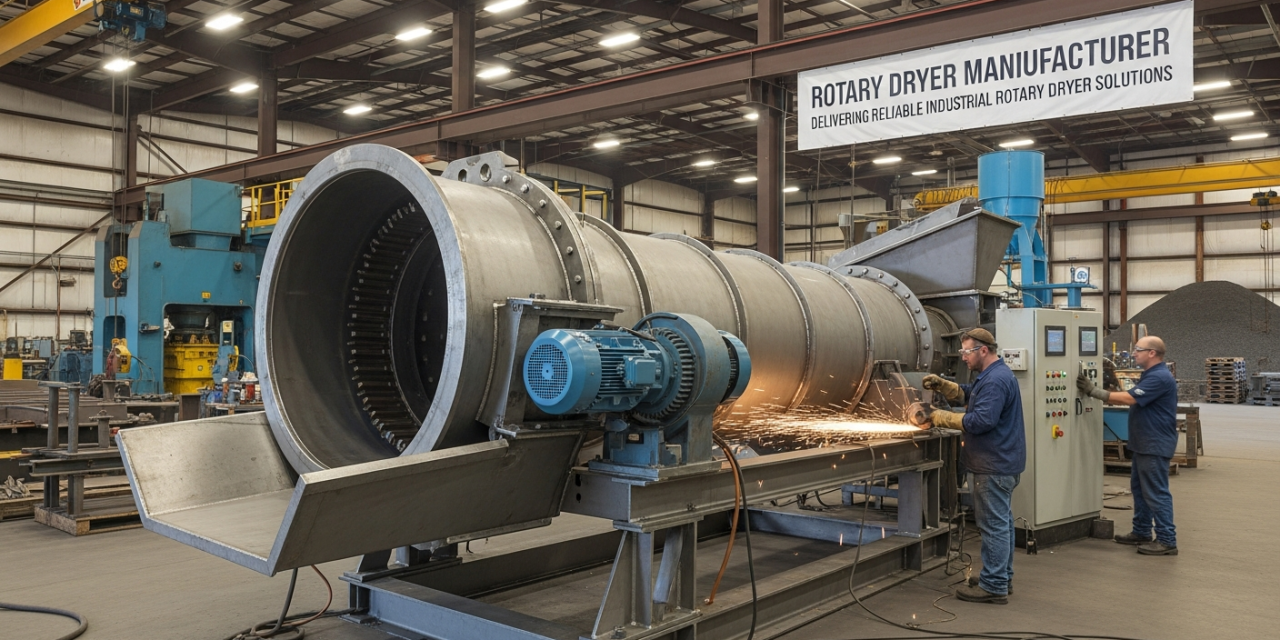
Material drying represents a critical step in countless industrial processes worldwide. Whether processing minerals, chemicals, agricultural products, or industrial waste, the right drying equipment determines production efficiency and product quality. The rotary dryer has become the standard solution for bulk material drying, combining proven technology with operational reliability. Selecting the right Rotary Dryer Manufacturer ensures your operation receives equipment designed for long-term performance.
What Makes a Rotary Dryer Essential for Industrial Operations?
A rotary dryer consists of a cylindrical drum that rotates while processing materials through direct or indirect heat exposure. The drum sits at a slight angle, allowing gravity to move materials from the feed end to the discharge end. Internal flights lift and cascade materials through heated gases, maximizing contact between solids and drying medium.
This simple yet effective design handles diverse materials across multiple industries. From fine powders to coarse aggregates, from highly abrasive minerals to delicate food products, the industrial rotary dryer adapts to various processing requirements. The continuous operation mode supports high-volume production while maintaining consistent moisture removal.
The versatility stems from customizable design parameters. Drum diameter, length, rotation speed, flight configuration, and heating method can all be adjusted to match specific material characteristics and capacity requirements. This flexibility explains why operations worldwide rely on rotary drying technology.
Core Components of Industrial Rotary Dryers
Understanding the construction helps appreciate why quality manufacturing matters. A rotary dryer includes these essential components:
Rotating Drum: The main vessel where drying occurs, typically constructed from carbon steel or stainless steel depending on material corrosiveness and operating temperature. Drum dimensions directly impact processing capacity and residence time.
Support System: Heavy-duty riding rings, trunnion wheels, and structural supports that carry the drum weight while allowing smooth rotation. Proper alignment prevents premature wear and operational issues.
Drive Mechanism: Electric motors, reduction gearboxes, and drive pinions that rotate the drum at controlled speeds ranging from 2 to 10 RPM based on application needs.
Lifting Flights: Internal plates welded throughout the drum length that lift materials and shower them through the hot gas stream. Flight design significantly affects drying efficiency and uniformity.
Heating System: Direct-fired burners, indirect heat exchangers, steam coils, or thermal fluid systems that provide the energy for moisture evaporation.
Seals and Bearings: Critical components preventing air infiltration while supporting rotating elements. Quality seals maintain thermal efficiency and reduce operating costs.
Each component requires precision manufacturing and proper material selection. A reliable rotary dryer manufacturer ensures all parts work together seamlessly for optimal performance.
How Rotary Dryers Work: The Drying Process
The drying process begins when wet materials enter the elevated drum end. As rotation occurs, internal flights scoop up material and carry it toward the drum top. Gravity causes the material to cascade through the hot gas stream, creating maximum contact for heat and mass transfer.
Three heat transfer mechanisms work simultaneously:
Convection: Hot gases flowing through the drum transfer heat directly to material particles. This accounts for 70-80% of total heat transfer in most applications.
Conduction: Material particles contacting the heated drum shell receive heat through direct contact. This becomes more significant in indirectly heated designs.
Radiation: Hot drum surfaces radiate heat to material particles, contributing to overall drying efficiency particularly at higher temperatures.
The cascading action repeats thousands of times as materials progress through the drum. The slight downward slope combined with rotation ensures steady material flow from feed to discharge. Residence time inside the drum can be controlled through rotation speed adjustments and flight configuration changes.
Exit moisture content depends on inlet conditions, drying time, temperature, and airflow. Modern industrial rotary dryer systems include automated controls that adjust these parameters to maintain consistent product quality regardless of feed variations.
Talk to Our Experts and Get the Right Industrial Solution Today
Global Applications Across Industries
Mining and Mineral Processing
Mining operations process enormous quantities of wet ores, concentrates, and coal. A rotary dryer reduces moisture before shipping, cutting transportation costs and preventing material degradation. Iron ore pellet plants, copper concentrate facilities, and coal preparation plants worldwide depend on this technology.
Chemical Manufacturing
Chemical producers require precise moisture control for fertilizers, pigments, catalysts, and specialty chemicals. Temperature-sensitive materials benefit from the gentle drying action and temperature control capabilities that quality rotary dryer suppliers can provide.
Food and Agricultural Products
Grain drying, animal feed production, and specialty crop processing utilize rotary dryers designed for food-grade applications. Stainless steel construction and careful temperature management preserve nutritional value while preventing microbial growth.
Environmental Applications
Wastewater treatment facilities use rotary dryers for sludge volume reduction before disposal. Contaminated soil remediation programs employ thermal desorption systems based on rotary dryer technology. Industrial waste processing operations worldwide rely on these systems for safe material handling.
Key Advantages of Rotary Drying Technology
High Processing Capacity: Industrial units handle throughputs from several hundred kilograms to over 100 tons per hour, supporting large-scale continuous production.
Consistent Results: The cascading action ensures uniform moisture removal across the entire material batch, eliminating hot spots and under-dried regions.
Material Flexibility: Processes materials with initial moisture from 5% to 60%, particle sizes from 50 microns to 50 millimeters, and varying flow characteristics without major modifications.
Energy Efficiency: Modern designs incorporate insulation improvements, seal upgrades, and heat recovery systems that reduce fuel consumption by 30-40% compared to older equipment.
Durability: Robust construction using quality materials provides 20-30 year service lives with proper maintenance. The simple mechanical design minimizes breakdown risk.
Operational Control: Integration with programmable logic controllers enables precise parameter monitoring and automatic adjustments, reducing operator workload while improving consistency.
Selecting the Right Rotary Dryer Manufacturer
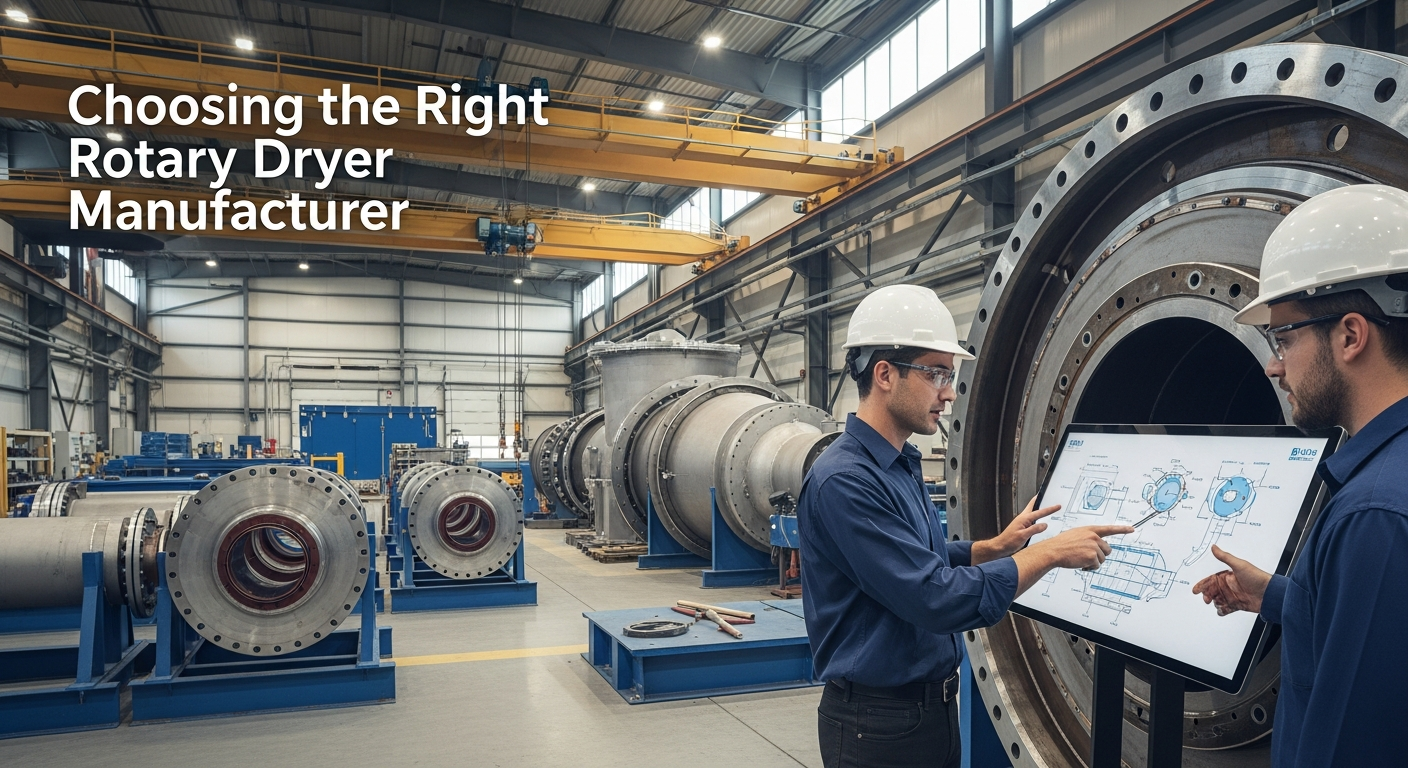
Partnering with experienced rotary dryer suppliers and a reputable rotary dryer manufacturer is crucial for project success. Key criteria include:
Engineering Expertise: Manufacturers with extensive application experience provide optimized solutions based on proven designs across multiple continents and industries.
Customization Capabilities: The ability to modify standard designs for specific materials, capacities, and site conditions is essential for global operations.
Quality Assurance: Equipment manufactured according to international quality standards with documented testing ensures reliability. Material certifications and ISO compliance guarantee worldwide performance.
Technical Support: Comprehensive services including process engineering, installation supervision, commissioning assistance, and operator training add value regardless of location.
Global Spare Parts Network: Ready access to replacement components worldwide minimizes downtime during maintenance or repairs.
Innovation Focus: Companies investing in research and development offer advanced features like improved flight designs, enhanced sealing systems, and sophisticated control interfaces.
Shalimar Engineering exemplifies these qualities as a leading rotary dryer manufacturer, combining decades of experience with modern engineering capabilities to deliver reliable drying solutions worldwide.
Installation and Operational Guidelines
Proper installation by qualified rotary dryer suppliers ensures optimal performance:
Foundation and Assembly: Properly designed concrete foundations provide stable support with precise alignment of drive components, support rollers, and drum assembly according to international engineering standards.
System Integration: Heat source connections, material handling systems, and control devices installed following specifications and international safety codes.
Commissioning: Comprehensive testing including rotation checks, temperature calibration, and safety interlock verification before processing actual materials.
Operator Training: Training covers normal operation, parameter adjustment, routine maintenance, and emergency procedures adapted to local contexts.
Maintenance Best Practices
Preventive maintenance extends equipment life and reduces downtime:
Daily Operations: Monitor bearing temperatures, listen for unusual noises, observe material flow patterns, and check drum alignment.
Weekly Tasks: Inspect flight condition, verify seal integrity, check drive belt tension, and test safety systems.
Monthly Procedures: Lubricate bearings and drive components, inspect structural supports, examine insulation condition, and review operational data.
Annual Overhaul: Comprehensive inspection of all components, replacement of worn parts, recalibration of instruments, and safety system testing.
Common issues include uneven drying (solved by flight modifications or speed adjustments), excessive fuel consumption (addressed through seal repairs and parameter optimization), and material buildup (resolved with knockers or operational modifications).
Technical Performance Parameters
Key specifications for evaluating rotary dryer options:
Capacity Range: From 500 kg/hour for pilot operations to 100+ tons/hour for large industrial facilities.
Temperature Capabilities: Operating ranges from 150°C to 800°C depending on application requirements.
Moisture Reduction: Systems typically reduce moisture from 40-50% down to 1-5% final moisture in single pass operation.
Thermal Efficiency: Modern systems achieve 60-75% thermal efficiency, with heat recovery options exceeding 80%.
Drum Dimensions: Standard lengths from 10 to 30 meters with diameters from 1.5 to 5 meters for industrial applications.
Future Technology Trends
The global drying equipment industry advances with innovations improving efficiency and sustainability:
Advanced Automation: PLC-based controls with real-time monitoring enable precise parameter adjustments and quality assurance across international operations.
Energy Recovery Systems: Heat exchangers capture waste heat from exhaust gases, meeting global sustainability goals.
Emission Control: Sophisticated dust collection and gas scrubbing systems meet stringent worldwide environmental regulations.
Smart Monitoring: IoT-enabled systems allow remote performance monitoring and predictive maintenance from anywhere globally.
Why Choose Shalimar Engineering
As trusted rotary dryer suppliers, Shalimar Engineering combines technical excellence with customer commitment for clients worldwide:
Application Engineering: Detailed analysis of material properties, capacity requirements, and site conditions for optimal specifications anywhere.
Custom Solutions: Design modifications addressing unique process challenges, space constraints, or special handling requirements across industries and regions.
Quality Manufacturing: Premium materials and strict quality control throughout fabrication, meeting international standards.
Global Support: Coordinated project execution from design through installation with ongoing technical assistance, spare parts supply, and performance optimization worldwide.
Conclusion
The rotary dryer remains essential in modern industrial drying operations across diverse global sectors. Success depends on selecting appropriate equipment from experienced rotary dryer manufacturers who understand application requirements and provide comprehensive support.
Shalimar Engineering’s industrial rotary dryer solutions combine proven technology with custom engineering to meet specific operational needs globally. Their commitment to quality, innovation, and customer service makes them a preferred partner for industries requiring reliable, efficient drying systems.
Investing in quality drying equipment from reputable rotary dryer suppliers ensures long-term operational success, consistent product quality, and competitive advantage in today’s demanding global industrial environment.
Talk to Our Experts and Get the Right Industrial Solution Today
Frequently Asked Questions (FAQs)
1. What is an industrial rotary dryer used for?
An industrial rotary dryer is used to reduce moisture content in bulk materials such as minerals, chemicals, agricultural products, food ingredients, and industrial waste. It ensures uniform drying, high throughput, and consistent output for large-scale operations.
2. How does a rotary dryer work?
A rotary dryer works by rotating a slightly inclined cylindrical drum while hot air or gas flows through it. Internal lifting flights lift and cascade the material through the heat stream, allowing efficient moisture evaporation through convection, conduction, and radiation.
3. What materials can be processed in a rotary dryer?
Rotary dryers can handle a wide range of materials including ores, coal, limestone, fertilizers, chemicals, grains, biomass, sludge, and industrial by-products. They are suitable for materials with varying particle sizes and moisture levels.
4. What are the advantages of choosing an industrial rotary dryer?
Industrial rotary dryers offer high processing capacity, uniform moisture reduction, energy-efficient operation, long service life, and the flexibility to handle different materials with minimal process modifications.
5. How do I choose the right rotary dryer for my application?
Selecting the right rotary dryer depends on material characteristics, required capacity, moisture reduction goals, heat source availability, installation space, and environmental compliance requirements. Working with an experienced rotary dryer manufacturer helps ensure proper sizing and design.