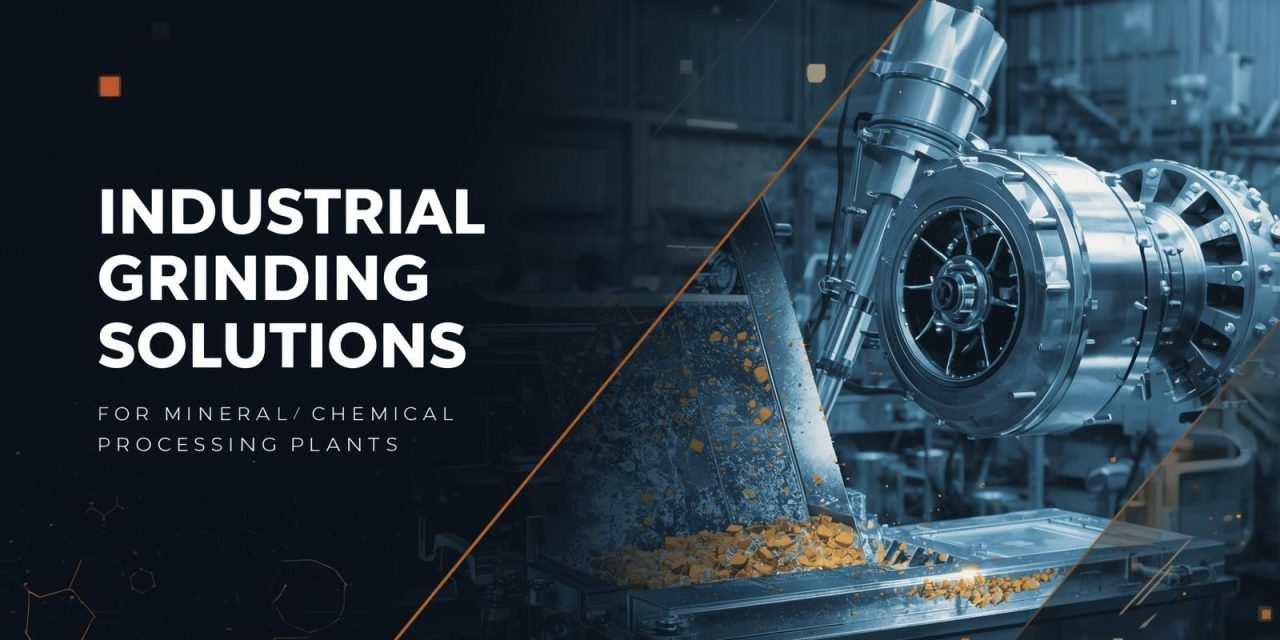
Modern industrial grinding solutions form the foundation of successful mineral and chemical processing operations. The ability to achieve precise particle size reduction directly impacts product quality, operational efficiency, and profitability across manufacturing sectors. Whether processing iron ore, sulphur, or specialty chemicals, selecting appropriate grinding equipment for processing plants determines production outcomes and long-term sustainability.
Understanding the Role of Industrial Grinding in Processing Plants
Industrial grinding systems serve as critical control points in processing facilities. The transformation of raw materials into usable products depends on achieving specific particle characteristics that enable downstream operations.
Why Size Reduction is Critical in Mineral Processing
Size reduction stands as the most fundamental requirement in mineral processing equipment operations. Crushing and grinding consume approximately 30-50% of total energy in processing plants, making equipment selection crucial for operational economics. The grinding stage determines whether materials meet specifications for beneficiation, chemical reactions, or end-use applications.
Impact of Particle Size on Chemical Reactions and Product Quality
Particle size directly governs chemical reaction rates and product quality. Finer particles offer increased surface area, accelerating dissolution, combustion, and chemical interactions. In chemical processing grinding machines, achieving uniform particle distribution ensures consistent reaction kinetics and product homogeneity. This precision becomes particularly vital in pharmaceutical intermediates, catalysts, and specialty chemical manufacturing.
Grinding as the Backbone of Beneficiation and Downstream Operations
Grinding operations enable mineral beneficiation by liberating valuable minerals from gangue material. Ball mill for mineral grinding applications create the particle sizes necessary for flotation, magnetic separation, and gravity concentration processes. Without adequate size reduction, recovery rates decline and concentrate quality suffers.
Energy Efficiency and Operational Cost Considerations
Energy efficiency considerations increasingly influence equipment selection decisions. Energy-efficient grinding technology reduces operational costs while supporting sustainability objectives. Modern heavy-duty grinding machines incorporate design features that minimize energy waste through optimized grinding media motion, improved material transport, and reduced heat generation.
Key Industrial Grinding solutions Equipment Used in Mineral and Chemical Industries
Ball Mill for High-Capacity Mineral Grinding
Ball mills dominate high-capacity grinding applications across mineral processing operations. These cylindrical vessels rotate grinding media (steel balls or ceramic spheres) to pulverize material through impact and attrition. The versatility of ball mills makes them suitable for iron ore grinding plant operations, cement production, limestone processing, and chemical manufacturing.
Continuous grinding configurations enable steady-state production with predictable particle size outputs. Material flows through the mill at controlled rates, maintaining consistent residence time and grinding action. Batch grinding offers flexibility for specialty products requiring specific processing parameters or when handling multiple materials in smaller quantities.
Ball mill for mineral grinding systems excel in applications requiring wet or dry grinding of hard, abrasive materials. Their robust construction withstands demanding conditions in mineral beneficiation plant environments.
Vertical Grinding Mill for Energy-Efficient Operations
Vertical grinding mills deliver significant advantages in space-constrained facilities and energy-conscious operations. The vertical configuration creates a compact footprint compared to traditional horizontal mills, reducing building costs and installation requirements.
Lower power consumption distinguishes vertical mills from conventional designs. Efficient grinding action through material bed compression reduces specific energy requirements by 20-40% in comparable applications. This efficiency translates directly to operational cost savings and improved plant economics.
Fine grinding performance makes vertical mills ideal for producing cement, minerals, and chemical powders requiring narrow particle size distributions. The integrated classifier system enables precise particle control without additional equipment.
Roller Mill Plants (3 / 4 / 5 Roller Systems)
Roller mill plant configurations provide controlled particle size distribution through precision-engineered roller arrangements. Three, four, or five roller systems apply compressive forces to material passing between rollers and grinding tracks.
The grinding mechanism produces relatively uniform particles compared to impact-based methods. This controlled particle distribution benefits applications where particle shape and size consistency affect product performance. Mineral grinding solutions using roller mills suit materials with medium hardness, including minerals, clays, and chemical compounds.
The modular nature of roller systems allows capacity scaling through roller diameter and number variations. This flexibility supports both initial plant design and future expansion requirements.
Jet Mill and Air Classifying Mill for Ultra-Fine Grinding
Jet mills achieve micron-level and sub-micron particle sizes through high-velocity air streams that cause particle-on-particle collisions. The absence of mechanical grinding media eliminates contamination risks, making jet mills essential for pharmaceutical, electronic materials, and specialty chemical applications.
Air classifying mills combine grinding and classification in single units, producing precise particle size distributions. The integrated air classifier separates oversized particles for recirculation, ensuring the final product meets specifications. These systems excel at fine grinding where particle size control directly impacts material properties.
Precision particle control enables manufacturers to target specific size ranges required for optimal product performance. Applications include toner production, pigments, metallic powders, and advanced ceramics.
Pulverizers and Hammer Mills for Medium-Fine Grinding
Pulverizer machines and hammer mills offer cost-effective solutions for medium-fine grinding across diverse industries. High-speed rotating hammers impact material against breaker plates and screens, fragmenting particles through combination of impact, attrition, and shear forces.
The versatility of hammer mills accommodates materials ranging from soft to medium-hard, including biomass, chemicals, minerals, and aggregates. Quick screen changes enable particle size adjustment without extensive downtime.
These industrial size reduction equipment options provide excellent value in applications not requiring ultra-fine grinding or where material characteristics suit impact-based size reduction.
industrial Grinding Solutions for Specific Industries
Mineral Processing Plants
Industrial grinding equipment requirements vary significantly across mineral types and processing objectives. Iron ore grinding demands robust equipment handling abrasive, high-density material. Circuit designs incorporate primary ball mills followed by secondary grinding stages achieving liberation sizes for magnetic separation.
Bauxite processing for alumina production requires controlled grinding, preventing over-grinding while ensuring adequate particle exposure for digestion processes. Quartz grinding produces silica powders for glass manufacturing, foundry applications, and industrial uses. Copper and other base metal operations depend on precise grinding to maximize flotation recovery while minimizing reagent consumption.
Each mineral presents unique grinding challenges requiring application-specific equipment selection and circuit design.
Chemical Processing Plants
Chemical processing grinding machines enable production of pharmaceutical intermediates, agrochemicals, industrial chemicals, and specialty compounds. Sulphur grinding plant operations produce sulphur powder for fertilizer and pesticide production, vulcanization processes, and chemical synthesis.
Material properties including chemical reactivity, moisture sensitivity, and temperature limitations influence equipment selection. Explosion-proof designs, inert gas atmospheres, and specialized materials of construction address safety requirements in chemical grinding applications.
Precision particle control ensures chemical products meet stringent specifications for dissolution rates, surface area, and physical properties affecting downstream performance.
Integration of Grinding Systems in Turnkey Plant Projects
Turnkey grinding plant manufacturer services encompass complete project delivery from concept through commissioning. Comprehensive grinding plant layout considers material flow patterns, equipment accessibility, maintenance requirements, and future expansion possibilities.
Material handling systems integration ensures efficient transfer between grinding stages, storage, and packaging operations. Conveying equipment, hoppers, feeders, and automation systems coordinate to maintain production continuity.
Dust collection and pollution control systems protect worker health and environmental compliance. Baghouses, cyclones, and wet scrubbers capture particulate emissions from grinding operations. Proper dust control also prevents product loss and cross-contamination.
Automation and process control systems optimize grinding performance through real-time monitoring and adjustment. Feed rate control, grinding media management, and classifier settings respond to material characteristics and production targets.
Factors to Consider When Selecting Industrial Grinding Equipment
Feed material properties establish baseline equipment requirements. Size, hardness, moisture content, and abrasiveness determine which grinding equipment manufacturer technologies suit specific applications. Required output fineness defines the grinding mechanism and circuit configuration necessary to achieve specifications.
Production capacity requirements influence equipment sizing and quantity. High-capacity grinding systems demand larger mills or multiple parallel units. Understanding peak and sustained production needs prevents capacity bottlenecks.
Energy consumption analysis identifies long-term operational costs. Initial equipment investment competes against lifecycle energy expenses. Energy-efficient grinding technology may justify higher capital costs through operational savings.
Maintenance and lifecycle cost evaluation considers wear part replacement, lubrication requirements, and expected service intervals. Industrial machinery exporter offerings vary in maintenance intensity and parts availability affecting total cost of ownership.
How Advanced Grinding Technology Improves Plant Efficiency
Modern grinding equipment reduces power consumption through improved grinding media dynamics, optimized mill geometries, and integrated classification. Energy savings of 15-30% compared to older technologies directly improve industrial plant efficiency.
Higher throughput results from enhanced grinding mechanisms and better material transport. The same mill volume processes more material or achieves finer grinding in equivalent time.
Consistent product quality stems from improved process control and equipment design. Variation in particle size distribution narrows, reducing off-specification production.
Lower operational downtime through improved reliability and maintainability keeps production systems running. Predictive maintenance capabilities identify potential issues before failures occur.
Custom Engineered Grinding Solutions for Complex Processing Needs
Custom grinding plant solutions address applications where standard equipment configurations prove inadequate. Tailor-made plant design accounts for unique material properties, site constraints, production requirements, and integration with existing facilities.
Application-specific mill selection ensures optimal performance for challenging materials or specialized product requirements. Industrial grinding plant supplier engineering teams evaluate alternatives and recommend configurations matching technical and economic objectives.
Scalable systems accommodate future capacity expansion without complete redesign. Modular approaches allow incremental capacity additions as market demand grows.
Why Partnering with an Experienced Grinding Equipment Manufacturer Matters
Engineering expertise distinguishes capable grinding equipment manufacturer organizations from equipment suppliers. Experienced teams apply process knowledge, materials science understanding, and practical operational insights to project success.
Turnkey capability streamlines project execution through single-point responsibility. Design, procurement, fabrication, installation, and commissioning proceed under coordinated management.
After-sales support including spare parts availability, technical assistance, and process optimization services protect long-term investment value. Heavy-duty grinding plant installation represents substantial capital commitment requiring ongoing manufacturer partnership.
Global project execution experience enables successful implementation across diverse regulatory environments, logistics challenges, and local conditions.
Conclusion: Building Efficient and Scalable Grinding Systems
Strategic selection of industrial grinding solutions determines processing plant competitiveness and profitability. The complexity of modern mineral processing grinding equipment and chemical grinding equipment requires thorough evaluation of technical requirements, operational objectives, and economic constraints.
Industrial milling solutions continue advancing through materials innovation, process optimization, and control system sophistication. Manufacturers investing in proven continuous grinding system technologies position themselves for sustained success in competitive global markets.
Get started with India’s trusted industrial grinding solutions today!
Long-term benefits for mineral and chemical manufacturers extend beyond immediate production gains. Efficient grinding operations reduce energy costs, improve product quality, minimize environmental impact, and support operational flexibility. The foundation of any successful processing facility rests on appropriate size reduction technology implemented through expert engineering and quality equipment.
Selecting the right partner for industrial material processing equipment ensures projects meet technical specifications, budget constraints, and schedule commitments while delivering reliable long-term performance.