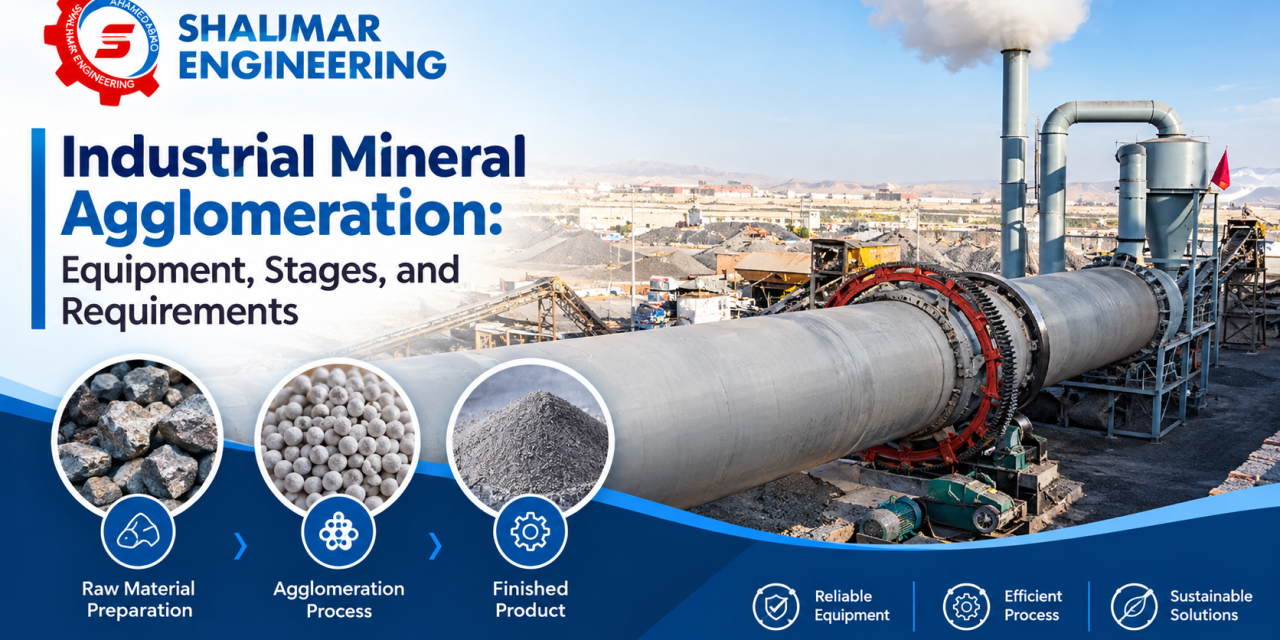
Industrial Mineral Agglomeration: Equipment, Stages, and Requirements
Transforming raw, extracted minerals into high-strength, usable industrial formats is a massive engineering undertaking. When raw minerals emerge from the earth, they are often too fine, too wet, or too chemically impure to enter blast furnaces directly. Mastering the iron ore pelletizing process requires a deep understanding of mechanical crushing, precise chemical blending, and extreme thermal hardening. Plant operators must carefully select heavy-duty machinery that can withstand continuous abrasion while maintaining exact production tolerances.
In this comprehensive technical guide, we will walk through every stage of mineral agglomeration. From the initial size reduction of raw rocks to the final high-temperature calcination of hardened spheres, each piece of equipment plays a mandatory role. We will also examine the specific logistical requirements for setting up massive industrial facilities across the Middle East, detailing how to source the correct heavy machinery for your exact operational location.
The Foundation of Mineral Upgrading
Before any binding or shaping can occur, raw extracted materials must undergo thorough physical preparation. This initial phase removes impurities and separates the valuable mineral content from worthless waste rock. Establishing a dedicated iron-ore beneficiation plant in iraq provides operators with the infrastructure needed to wash, screen, and magnetically separate the raw feed. The goal of this stage is to increase the total iron content of the raw material, ensuring that subsequent thermal stages operate at maximum efficiency.
Without proper beneficiation, the final pellets will lack the necessary structural integrity and chemical purity required by steel manufacturers. This phase dictates the overall quality of the entire production line, making robust screening and washing equipment absolutely vital for long-term industrial success.
Primary and Secondary Grinding Operations
Once the raw material is purified, it must be reduced to an extremely fine powder. The physical surface area of the mineral particles must be drastically increased so that binding agents can adhere properly later in the workflow. Heavy industrial facilities rely heavily on specialized Minerals Chemicals Grinding Equipments to achieve this precise particle size distribution.
For continuous, ultra-fine size reduction, operators globally trust the traditional Ball Mill. This massive rotating cylinder uses heavy forged steel balls to crush rocks through continuous impact and attrition. If you are establishing a facility in the Middle East, deploying a ball mill plant in Iran offers reliable, high-volume crushing capabilities. To build this infrastructure, you must consult a dedicated ball mill plant manufacturer in Iran to ensure the internal steel liners are cast for extreme durability. Securing a long-term contract with a Ball Mill Plant supplier in Iran guarantees a steady flow of replacement grinding media. Furthermore, utilizing a capable Ball Mill Plant exporter in Iran ensures that these massive steel cylinders arrive safely at your site. To understand the engineering behind these crushers, reading insights from a top ball mill manufacturer in India and studying exactly how different ball mills work will assist your procurement strategy.
For facilities that prioritize energy efficiency alongside high output, the Vertical roller mill stands as an exceptional alternative. These systems use hydraulic pressure to crush material against a rotating grinding table. Sourcing this machinery locally is critical for ongoing maintenance; therefore, working with a vertical roller mill manufacturer in iraq ensures the equipment meets regional industrial standards. A local vertical roller mill supplier in iraq provides rapid access to hydraulic spares, while a vertical roller mill exporter in iraq manages the heavy transport logistics. Similarly, in neighboring regions, securing a vertical roller mill manufacturer in iran, a vertical roller mill supplier in iran, and a vertical roller mill exporter in iran provides identical localized support for your grinding operations.
Medium and High-Capacity Roller Mills
Different production quotas demand specifically sized roller configurations. For medium-scale mineral crushing, installing a 3 Roller Mill Plant provides an excellent balance of power and energy consumption. Operating a 3 Roller Mill Plant in Iraq requires partnering with an experienced 3 Roller Mill Plant manufacturer in Iraq to customize the internal air classification system. Establishing ties with a 3 Roller Mill Plant supplier in Iraq ensures continuous operation, and a 3 Roller Mill Plant exporter in Iraq will facilitate the initial heavy equipment delivery.
When production targets increase significantly, a 4 Roller Mill Plant becomes necessary to handle the higher daily tonnage. A 4 Roller Mill Plant in Iran delivers exceptional continuous grinding force. By collaborating with a specialized 4 Roller Mill Plant manufacturer in Iran, a 4 Roller Mill Plant supplier in Iran, and a 4 Roller Mill Plant exporter in Iran, plant managers guarantee their facility operates without mechanical bottlenecks.
For the most demanding, highest-capacity industrial environments, only a 5 Roller Mill Plant will suffice. Deploying a 5 Roller Mill Plant in Iran maximizes continuous throughput. The procurement logic remains identical: source the heavy machinery through a 5 Roller Mill Plant manufacturer in Iran, secure spare parts from a 5 Roller Mill Plant supplier in Iran, and manage the complex logistics via a 5 Roller Mill Plant exporter in Iran.
Precision Mixing and Binder Preparation
After the minerals are pulverized into a fine dust, they must be combined with specific chemical binders and an exact amount of water. This blending phase is critical because an uneven mixture will cause the final pellets to shatter inside the thermal kilns. To achieve a perfectly homogeneous mixture, facilities utilize an Industrial Ribbon Blender.
The Ribbon Blender Machine features a horizontal U-shaped trough and a specialized double-helical agitator that gently but thoroughly folds the heavy powders together. When constructing a chemical or mineral mixing plant in the region, working with a Ribbon Blender manufacturer in Iran ensures the heavy steel trough can handle abrasive mineral dust. A Ribbon Blender supplier in Iran assists with integrating the mixer into your automated workflow, and a Ribbon Blender exporter in Iran handles the cross-border freight. Utilizing a perfectly engineered Ribbon Blender eliminates inconsistencies in your raw feed, ensuring every subsequent process runs smoothly.
Controlling Moisture with Thermal Drying
Before the mixed material can be shaped, its moisture content must be strictly controlled. If the material is too wet, it turns into sludge; if it is too dry, it turns to dust. To reach the precise moisture percentage required for agglomeration, the material passes through an Industrial Rotary Dryer.
A Rotary Dryer consists of a massive inclined cylinder that showers the wet material continuously through a stream of hot combustion gases. When installing a rotary dryer in iraq, extreme ambient temperatures must be factored into the insulation design. Choosing a competent Rotary Dryer manufacturer in iraq ensures the burner system is calibrated for local fuel sources. A trusted rotary dryer supplier in Iraq will provide the necessary trunnion wheels and thrust rollers for maintenance, while a rotary dryer exporter in iraq ensures the massive steel shell reaches your facility safely.
Forming the Green Balls: The Core Agglomeration Phase
Once the raw material is perfectly ground, mixed, and moisture-controlled, it enters the agglomeration discs or drums. The core of the iron ore pelletizing process involves rotating the damp powder at a specific angle and speed, causing the particles to naturally bind together into small, uniform spheres known as “green balls.”
Operating a dedicated iron ore pelletizing plant requires massive structural steel and precision motor controls. Building an Iron Ore Pelletizing plant in Iraq demands strict adherence to heavy industrial zoning laws. You must consult an Iron Ore Pelletizing plant manufacturer in Iraq to design the specific rotation parameters for your unique mineral chemistry. A local Iron Ore Pelletizing plant supplier in Iraq ensures the facility remains operational year-round, and an Iron Ore Pelletizing Exporter in Iraq manages the procurement of the massive agglomeration discs.
This exact same mechanical methodology applies to various other extracted minerals. If your mining site extracts different resources, constructing an Other Ore Pelletizing Plant in Iraq is the logical next step. Collaborating with an Other Ore Pelletizing Plant manufacturer in Iraq, an Other Ore Pelletizing Plant supplier in Iraq, and an Other Ore Pelletizing Plant exporter in Iraq delivers the customized engineering necessary for different mineral profiles. Integrating a comprehensive Iron & Other Ore Pelletizing Plant directly into your workflow guarantees high yield and consistent structural quality across all your exported goods.
Extreme Temperature Calcination and Hardening
The “green balls” produced in the agglomeration phase are fragile and contain residual moisture. To make them strong enough to withstand the crushing weight of a blast furnace, they must be baked at extreme temperatures. This thermal hardening takes place inside a massive, refractory-lined cylinder known as a lime kiln or a calcination kiln.
A Rotary Kiln subjects the pellets to temperatures exceeding 1,200 degrees Celsius, causing the chemical bonds to fuse permanently. Constructing a Rotary Kiln in Iraq requires specialized fire-brick linings capable of surviving severe thermal shock. Partnering with a specialized Rotary Kiln manufacturer in Iraq ensures the heavy steel shell will not warp under extreme heat. A reliable Rotary Kiln supplier in iraq provides rapid replacement of the internal refractory bricks, while a Rotary Kiln exporter in iraq handles the complex logistics of moving the heaviest single piece of equipment in the entire facility.
Expanding Capabilities: Agricultural Chemical Granulation
The mechanical principles used to form mineral pellets transfer exceptionally well to the agricultural chemical sector. Water Dispersible Granules (WDG) are a highly sought-after chemical format because they deliver active ingredients safely without generating hazardous, combustible dust.
Building a specialized Suplhur WDG Plant involves wet milling, spray drying, and controlled agglomeration. Operating a Suplhur WDG Plant in Iraq requires explosion-proof electrical systems to prevent the highly volatile sulfur dust from igniting. Plant owners must work alongside a certified Suplhur WDG Plant Manufacturer in Iraq and a knowledgeable Suplhur WDG Plant Supplier in Iraq to implement inert nitrogen blanketing systems. A Suplhur WDG Plant Exporter in iraq can supply the specific safety valves required for operation. Similarly, securing a Suplhur WDG Plant Manufacturer & Supplier in Iran provides turnkey solutions for facilities located across the border. Integrating a dedicated Sulphur WDG Plant diversifies your industrial output and opens up lucrative agricultural markets.
Connecting the Facility with Conveyance Systems
A high-capacity processing facility cannot function if material cannot move between the massive machines. Moving thousands of tons of abrasive rock, wet sludge, and hot pellets requires incredibly durable Material Handling Equipments.
Heavy-duty belt conveyors transport raw rocks across long horizontal spans, while reinforced bucket elevators lift abrasive materials vertically to feed the tops of the kilns and silos. Enclosed screw conveyors are strictly utilized to move fine, toxic powders without creating a breathing hazard for the plant workers. A smartly designed conveyance layout eliminates production bottlenecks and ensures a continuous, steady flow of material into the thermal equipment, which is absolutely mandatory for maintaining temperature stability.
Choosing the Right Industrial Engineering Partner
Executing a project of this magnitude requires working with a manufacturer that possesses deep engineering knowledge and a comprehensive product range. Heavy industrial machinery represents a multi-decade investment, meaning your chosen fabrication partner must deliver uncompromising steel quality and precise mechanical tolerances.
By selecting an experienced Industrial Spray Dryer & Evaporator Manufacturer & Supplier, you guarantee that your crushing, mixing, drying, and calcination equipment will integrate seamlessly together into a single, unified production network. Brand reliability, like that offered by Shalimar Engineering, ensures your facility will hit its production quotas safely and consistently for years to come.
Frequently Asked Questions (FAQs)
What is the primary function of beneficiation prior to pelletizing? Beneficiation physically separates valuable mineral content from worthless waste rock using washing, screening, and magnetic separation. This raises the overall purity of the feed material, ensuring the final product meets strict metallurgical standards.
Why is moisture control so vital before agglomeration? If the powdered mineral is too dry, it will not bind together; if it is too wet, it forms a useless sludge instead of individual spheres. Precise moisture reduction ensures the binder chemicals activate correctly to form strong “green balls.”
How does a vertical roller mill differ from a traditional tumbling cylinder? A vertical configuration uses hydraulic pressure to force heavy rollers down onto a rotating grinding table, whereas a traditional cylinder relies on the tumbling impact of forged steel balls. Vertical configurations generally consume less electricity for the same volume of output.
What is the purpose of the extreme heat inside the calcination cylinder? The extreme heat fuses the individual mineral particles together permanently, completely removing all remaining moisture and chemical impurities. This thermal hardening ensures the final product will not turn back into dust during transportation or when subjected to heavy loads.
Final Thoughts on Upgrading Your Facility
Establishing a high-capacity mineral processing facility requires exact planning, robust structural engineering, and highly durable heavy machinery. Every crushing, mixing, drying, and hardening stage must work in perfect synchronization to maintain profitability and product quality. By understanding these mechanical requirements and sourcing the correct localized equipment, you can successfully scale your operations and upgrade your entire iron ore pelletizing process today.
At Shalimar Engineering, we possess the technical expertise to fabricate and install heavy-duty machinery tailored precisely to your production goals. To discuss your facility layout, request detailed equipment specifications, or speak directly with our design experts, please reach out via our Contact us portal. If you are ready to request a specific project quote, submit an Enquiry immediately, and our engineering team will assist you in planning your next major industrial expansion.